Do you often feel stressed, tired, or emotionally low? Modern life—full of commitments and screens—rarely offers truly restorative breaks. Time for relaxation, contemplation, or simple tranquility often feels like a luxury that’s hard to carve out. What if the solution to restoring balance weren’t a medication or a complicated treatment, but something simple, immediate, and elegant… like light? Chromotherapy offers exactly this: using colors and light to help the body and mind regain harmony. In this guide, we will explore how chromotherapy really works, when it can be useful (and when it should be approached with caution), and how you can experience it yourself—at home or in dedicated environments.
What Is Chromotherapy
Origins and Principles
Chromotherapy—also known as color therapy—is a discipline that dates back to ancient times: the ancient Egyptians, the Greeks, and later Eastern cultures such as the Indian tradition attributed symbolic and therapeutic value to colors. According to chromotherapy, each color has its own “vibration” or wavelength that can interact with the human body, influencing both the physical state and the mind.
How Does Colored Light “Work”?
Modern chromotherapy—especially in its applications in spas, wellness centers, or aesthetic treatments—uses colored LED lights to create a “light bath” effect. The idea is that exposure to colored light—directed over the entire body or specific areas—can stimulate physiological functions, influence mood, and either relax or energize, depending on the chosen color.
What the Theory Says: The Meaning of Colors
According to proponents of chromotherapy, each color produces specific effects on the mind and body. Here is an overview of the most common colors and their presumed impact:
Color
Effect / Attributed Benefit
Red
Energy, stimulation of circulation, and physical and mental vitality.
Orange
Toning effect; stimulates good mood, creativity, and optimism; helps release tension.
Yellow
Stimulates concentration, mental clarity, and a sense of well-being and happiness.
Green
Promotes balance, harmony, and calm; useful against stress, irritability, and insomnia.
Blue / Light Blue
Relaxation, calm, reduction of stress and anxiety; promotes sleep.
These effects form the basis of modern chromotherapy and its applications in spas, chromotherapy shower cabins, and home environments designed for wellness.
Where Chromotherapy Is Used Today
Spas and Wellness Centers
Many wellness centers integrate chromotherapy into their relaxation paths: light baths, emotional showers, and steam environments. Lighting is not just an aesthetic detail—it becomes an integral part of the sensory experience, helping to stimulate relaxation and psychophysical regeneration.
But it is important to distinguish between the different environments and the actual use of colored light:
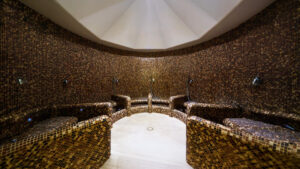
Steam bath (hammam): here chromotherapy is very widespread, thanks to the presence of warm steam, enveloping surfaces, and diffused colored light. Colored LEDs create an immersive atmosphere that promotes relaxation, harmony, and mental balance. In humid, saturated environments like these, colored light stands out naturally, accompanying the sensory journey.
Emotional showers: like the one shown in the featured image, they use colored LED lighting (blue, red, green, orange, etc.) combined with hot and cold water jets, aromatherapy, and ambient sounds. Each element is designed to create a multisensory effect and contribute to overall well-being.
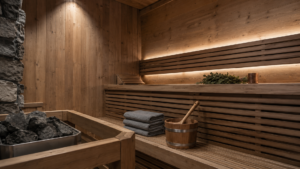
Saunas: on the other hand, chromotherapy is not commonly found inside saunas. In these environments, where high temperatures and natural surfaces such as wood dominate, white LED lighting is almost exclusively used. This is sufficient to ensure visibility and maintain consistency with the minimalist, natural atmosphere typical of these spaces. The use of colored light is rare and generally avoided so as not to alter the perception of heat or disturb sensory balance.
Salt rooms and salt walls: in these environments as well, light plays a fundamental role, but not a chromotherapeutic one. Himalayan pink salt, for example, requires white LED lighting to enhance its natural color and crystalline texture. The use of artificial colors would compromise its aesthetic effect and sense of visual purity, so neutral light is preferred.
Claimed Benefits — and What Science Says
Attributed Benefits
Improvement in mood, reduction of stress and anxiety;
Improved sleep quality and relaxation;
Greater concentration and mental clarity (e.g., with colors such as yellow or green);
A sense of overall well-being, psychophysical harmony, and relaxation;
Limits and Lack of Evidence
However, it is important to be clear: chromotherapy is considered a pseudoscience by the scientific community, as there is no solid evidence from clinically verified studies confirming real therapeutic effectiveness. Many of the attributed effects—such as improved mood, stress reduction, and relaxation—fall within the realm of color psychology or environmental influence rather than medicine in the strict sense.
How to “Use” Chromotherapy in a Mindful Way
If you want to try chromotherapy, here are a few helpful tips:
Use colored light as a complement to relaxation, not as a substitute for medical treatment.
Choose the color based on the effect you want (e.g., blue to relax, yellow to stimulate concentration).
Limit the duration of exposure: as with saunas or chromotherapy showers, short and frequent sessions can be more effective for mood.
Combine it with a relaxing environment—soft music, aromas, comfortable temperature—to enhance the sensory experience.
CONCLUSION
Chromotherapy can be a simple and pleasant way to improve the atmosphere at home, create relaxing or stimulating environments, and—why not—give a positive psychological boost to your mood. When used mindfully, as a complement to everyday well-being, it can offer moments of relaxation, calm, or energy according to your needs. That said, it is important to remain critical: chromotherapy is not medicine, nor does it replace proper treatment in the case of physical or psychological issues. It can be a wellness ally, but not a therapeutic certainty.
faq
1. Is chromotherapy recognized by medicine as a curative treatment? No. Chromotherapy is considered a pseudoscience: there are no clinical studies proving its effectiveness as a treatment for diseases.
2. Can I use chromotherapy at home on my own? Yes: with colored LED lamps, facial masks, or simple ambient lighting. It is best used as a complement to relaxation, not as a therapy.
3. How long does a typical session last? There is no universal protocol, but many practices recommend sessions of 10–30 minutes per day, depending on the goal.
4. Which colors should you choose to relax or sleep better? For relaxation and sleep, blue or green are among the most recommended; for energy, concentration, or improved mood, red, orange, or yellow are commonly suggested.
5. Are there any risks associated with exposing the body to colored lights? Generally no—the chromotherapy is non-invasive and safe. However, do not expect real medical effects: the benefits are mainly subjective and linked to atmosphere and personal perception.