Stepping into a spa should mean leaving stress behind and immersing yourself in a complete wellness experience. However, many facilities overlook a key element: the relaxation area. After a treatment, guests need a space that extends the benefits they’ve just received.
If this area is poorly designed, noisy, or uncomfortable, the overall experience loses value, negatively affecting the perception of the service.
The solution? Designing a spa relaxation area that combines ergonomic loungers, a welcoming herbal tea corner, and a carefully curated sensory atmosphere. In this article, you’ll discover how to create a space that builds customer loyalty and enhances the prestige of your wellness center.
What Is a Spa Relaxation Area and Why It Is Essential
The spa relaxation area represents the heart of the post-treatment experience. It is the space where the body absorbs the benefits of massages, saunas, and wellness rituals.
Key Benefits:
● Promotes muscle relaxation
● Extends the effects of treatments
● Enhances the customer experience
● Increases time spent in the spa
● Boosts customer loyalty
A well-designed relaxation area directly enhances the perceived quality of the wellness center.
SPA Loungers: Comfort, Design, and Functionality
Types of Loungers for the Relaxation Area
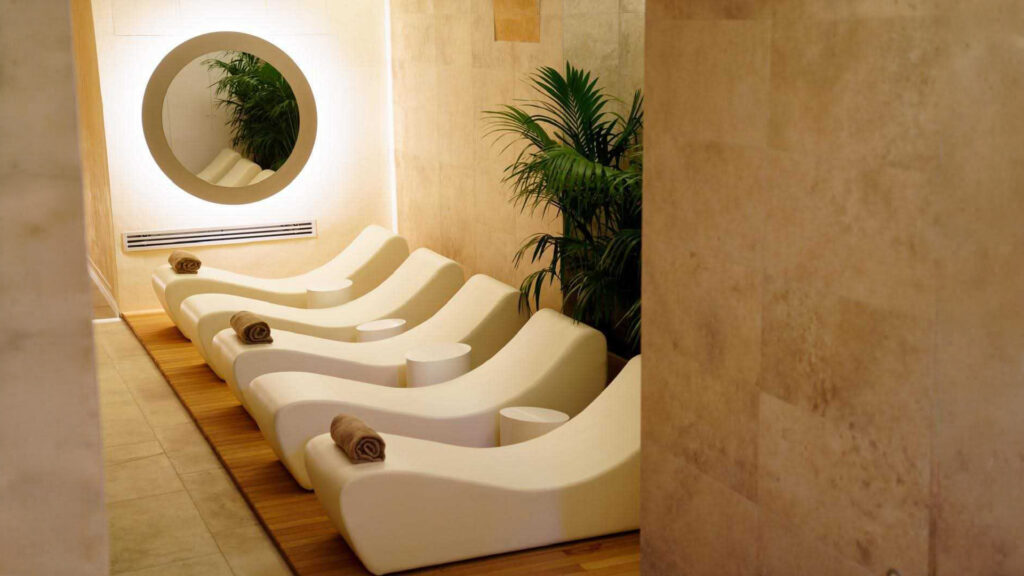
Loungers are the central element of the relaxation area. They must ensure comfort, ergonomics, and long-lasting durability.
Padded ergonomic loungers
Perfect for maximum comfort, they adapt to the body’s posture and help reduce muscle tension.
Heated loungers
Ideal for high-end spas, they promote deep relaxation and improve circulation.
Loungers in natural materials
Wood, stone, or eco-friendly materials enhance the sense of connection with nature.
Key Features
● Advanced ergonomics
● Moisture-resistant materials
● Easy to clean
● Design aligned with the spa concept
● Integration with chromotherapy systems
A high-quality spa lounger is not just a piece of furniture, but a true wellness tool.
Herbal Tea Area: The Value of Hydration and Ritual
Why Integrate a Herbal Tea Area
The herbal tea area is a strategic element in the design of a modern spa. After a sauna or steam bath, the body needs to rehydrate.
What to Offer Your Guests
● Detox herbal teas
● Relaxing infusions
● Infused waters
● Natural sugar-free beverages
Benefits of the Herbal Tea Area
● Supports the detox process
● Enhances the sensory experience
● Enhances the sensory experience
● Encourages guests to stay longer
Integrating a well-designed herbal tea area means elevating the level of service.
Relaxation Area Design: Creating a Multisensory Experience
An effective relaxation area goes beyond loungers and beverages. It should engage all the senses.
Key Design Elements
Soft lighting
Warm, soft lighting promotes mental relaxation.
Aromatherapy
Natural scents such as lavender or eucalyptus contribute to overall well-being.
Controlled acoustics
Relaxing music or natural sounds enhance the experience.
Well-organized spaces
Ensuring privacy and comfort is essential for guests.
Materials and Sustainability in the Spa Relaxation Area
More and more guests are choosing environmentally conscious facilities. Using sustainable materials is a valuable added benefit.
Recommended Choices:
● Certified wood
● Natural fabrics
● Recyclable materials
● Low energy consumption systems
An eco-friendly spa enhances the brand image and attracts a more conscious audience.
Mistakes to Avoid When Designing the Relaxation Area
Even small mistakes can compromise the overall experience.
The most common ones:
● Uncomfortable or insufficient loungers
● Lighting that is too harsh
● Noisy spaces
● Lack of a herbal tea area
● Inconsistent design
Avoiding these mistakes is essential to ensure a high-quality service.
Conclusion
The spa relaxation area is not just an additional space, but a strategic element for the success of a wellness center.
Investing in ergonomic loungers, a welcoming herbal tea area, and a multisensory design means offering a complete experience—one that builds customer loyalty and sets you apart from the competition.
If your goal is to enhance the perceived quality of your spa, the relaxation area is the place to start.
FAQ – Frequently Asked Questions
- How Much Space Is Needed for a Spa Relaxation Area?
The required space depends on the facility’s capacity, but it is recommended to allocate at least 2–3 square meters per lounger to ensure comfort, privacy, and proper layout of the relaxation area.
- Which Herbal Teas Are Best Suited for a Spa?
Detox, relaxing, and digestive herbal teas are the most suitable choices. Chamomile, ginger, fennel, and green tea are ideal options to promote well-being and enhance the customer experience.
- Are Heated Loungers Really Useful?
Yes, heated loungers improve circulation, relax muscles, and enhance the perception of luxury and comfort within the spa.
- How to Improve the Atmosphere of the Relaxation Area?
Through soft lighting, aromatherapy, relaxing music, and natural materials. A multisensory experience is essential for the success of the relaxation area.
- Is It Important to Include a Herbal Tea Area in Small Spas?
Absolutely. Even a small space dedicated to a herbal tea area can significantly enhance the guest experience and increase the perceived value of the service.